What I Learned About Location-Based Entertainment from Theme Park Expert Annabel Rochfort
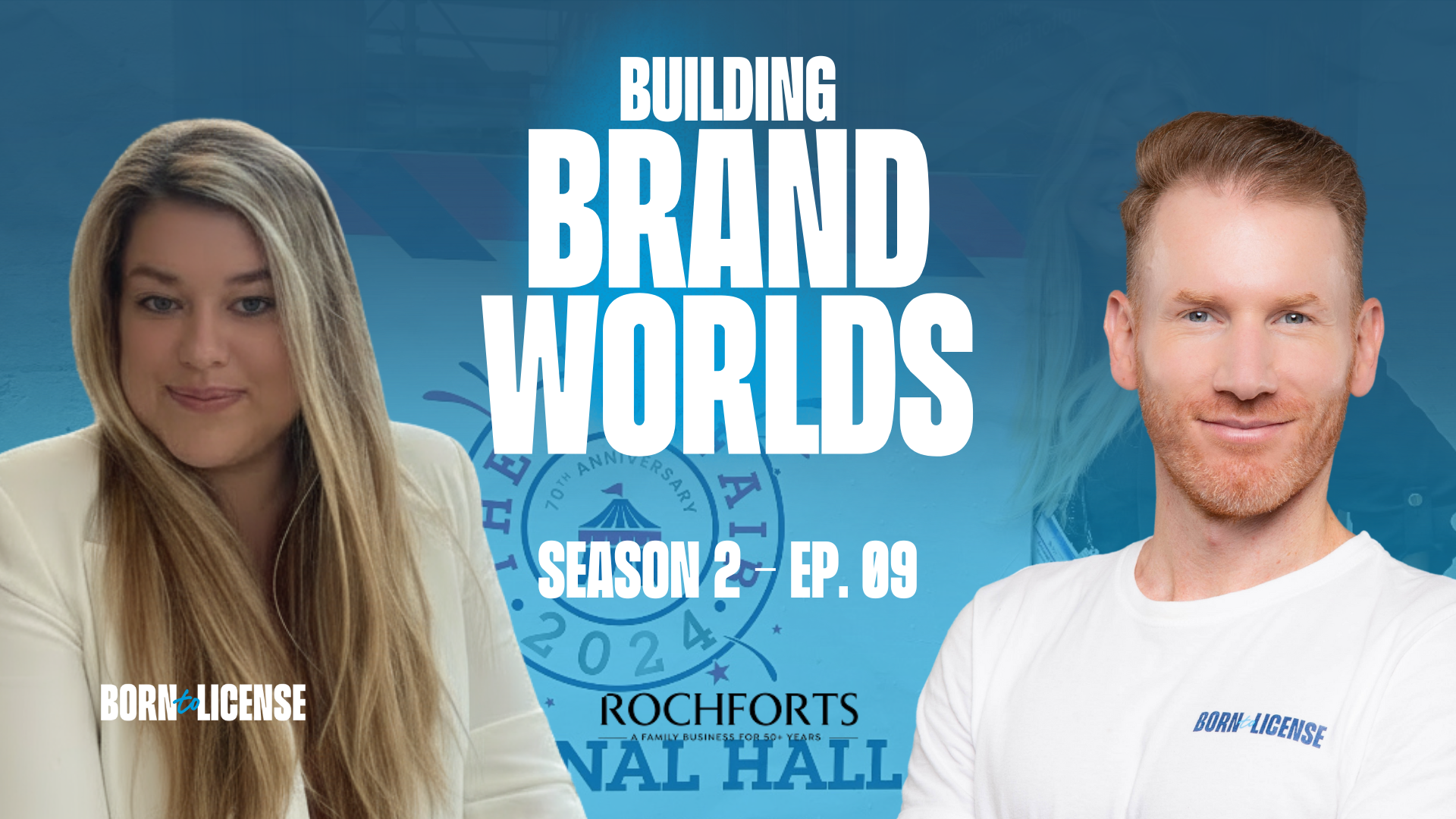
After two decades in licensing, I thought I understood how brands extend into consumer experiences. Then I sat down with Annabel Rochfort, and I realized that location-based entertainment operates on an entirely different level of complexity, risk, and opportunity than almost anything else in our industry.
Annabel's journey started with a childhood visit to Disneyland Paris, where she looked down Main Street and told her mum, "One day, I'm going to build these." Twenty years later, she's done exactly that—overseeing location-based entertainment for Cartoon Network, Ferrari, and now running her own consultancy, Rochfort's, advising everyone from licensors to real estate developers on how to bring brands to life in physical spaces.
What struck me most about our conversation wasn't just the scale of these projects—we're talking 18-24 month development timelines, tens of millions in investment, and partnerships that can make or break a brand's reputation. It was Annabel's clarity about what actually makes these deals work: finding the right partner matters more than having the hottest brand, speed rarely equals success, and the best opportunities often lie in categories most people aren't even thinking about yet.
Here are five critical insights from our conversation that anyone involved in location-based entertainment needs to understand.
1. Finding the Right Partner Trumps Having the Hottest Brand Every Single Time
The Insight: In location-based entertainment, the operator you choose to work with is more important than how popular your IP is—because they're the ones who will protect or destroy your brand reputation every single day.
Annabel was emphatic about this from her years managing partnerships at Ferrari and Cartoon Network: "Finding the right partner is the key. If you're signing a deal with Miral, who I worked with at Ferrari—I've seen what they do at SeaWorld, at Warner Brothers—they are experienced operators. They have an incredible health and safety plan in place. These are the people that you want to sign with to protect your brand."
She explained why this matters so much: "There's anyone that says there are no risks with signing a licensing agreement with location-based entertainment is lying. Ride safety—that's a big one. Even though as a license agreement you're not going to be liable financially for what happens, the reputational damage is worse. If you have an accident on a ride, it's awful."
The challenge for brand owners? "You're not on the ground. You're signing over your precious cargo as a licensor to somebody that probably doesn't know it or understand it as well as you do because you work in that company, you live and breathe that brand. So it's really, really key that you pass this on to whoever's working within the park."
Annabel shared how she managed this risk: "I often went to the parks myself and paid to go to Ferrari World to see how the customer service would be. Always happy to report that it was absolutely fantastic. We used to send secret visitors to go and give a review. There obviously needs to be continuous communication with the partner to make sure that they're keeping to health and safety guidelines."
Why It Matters: A single serious incident at a theme park doesn't just affect the operator—it becomes a headline with your brand name attached. "If you have an accident on a ride, it's awful. Not just for the licensing business, but obviously for the people within that attraction. The reputational damage is worse," Annabel explained. No amount of royalty revenue compensates for that kind of brand damage.
The Takeaway: Before signing any location-based entertainment deal, do deep due diligence on the operator's track record. Visit their existing facilities unannounced. Talk to their staff. Review their safety protocols. Check their insurance coverage. Ask for references from other licensors they work with. If they won't provide transparency, walk away—no matter how lucrative the deal looks on paper.
2. If You're Planning a Theme Park, You Need to Think 4-5 Years Ahead—Not 4-5 Months
The Insight: The timeline from "let's build a theme park" to "the park is open" is measured in years, not months, and choosing an IP that will still be relevant at the end of that journey is critical.
When I asked Annabel about timelines, her answer was sobering: "IMG World Adventures took four years to open. A license agreement for a park of that scale, depending on how nice the person is you're dealing with and how good your lawyers are, you could have a license agreement done within six to nine months. But ride vendors are busy at the moment—they have like an 18 to 20 month lead time, some of them two and a half years."
For smaller attractions, the timeline is faster but still substantial: "If it's a small scale attraction of four to five thousand square meters, you could probably do a licensing agreement within six months. If you own the building already and you just need to fill it, it would depend on the ride lead time. For a smaller setup, if you owned that land and you have your funding, you can probably get something open two and a half to three years."
This creates a strategic challenge: "There's no quick wins in this space. If you're wanting to be in this space, finding the right IP is so important and not focusing just on what's the hottest kids brand right now. You have to be thinking where is the puck going? What's going to be popular in four or five years time and have that longevity?"
Annabel emphasized the importance of choosing brands with staying power: "We've seen brands that are in very big theme parks in the US, big movie brands that did really really well for the first couple of movies. And then they died. So they're kind of stuck in these parks now and the kids just don't really want to go because they don't know what the movie is."
Why It Matters: If you commit to a three-year development cycle for a property that's only hot for 12 months, you'll open your park to empty seats and disappointed investors. Worse, you're locked into a long-term licensing agreement with minimum guarantees to pay, even if the IP has lost its appeal.
The Takeaway: When evaluating IPs for location-based entertainment, ignore what's trending on TikTok today. Look at properties with multi-generational appeal, consistent content production, and proven longevity. Harry Potter works because new content continues. Avatar works because it's visually spectacular and timeless. James Bond works because it's been relevant for 60 years. Choose accordingly.
3. Lifestyle Brands Often Outperform Entertainment Brands in Theme Parks—And Most People Don't Realize It
The Insight: Food and beverage brands, automotive brands, and other lifestyle properties often sustain better in theme parks than entertainment IP because they have continuous market presence and investment.
This insight genuinely surprised me, but Annabel's logic was compelling: "Working in both lifestyle and media, I do think that there is a strength in taking a lifestyle brand. M&Ms, Haribo—these kinds of brands are great to sustain because they have continuous investment because they make sweets, they're always on the shelf. They do Easter eggs, they do whatever. So I think food and beverage brands are interesting."
She contrasted this with entertainment properties: "There's very few movie brands that we've seen that could sustain a life in a theme park for 10 years. We've obviously seen Harry Potter incredible, but they still managed to keep Harry Potter alive by bringing out Fantastic Beasts. Avatar at Disney—an ideal movie brand to put into a theme park, it's just such a beautiful film. Lord of the Rings would probably sustain."
The challenge with entertainment IP? "We've seen brands that were in very big theme parks in the US that did really well for the first couple of movies. And then they died. So they're kind of stuck in these parks now."
Annabel used Ferrari as the perfect example: "Ferrari as a brand is innovative, it's thrill, it is luxury. The Lego and Ferrari collaboration was my favorite that I worked on. The build and race test centers are now in the Lego lands around the world. It's a nostalgic brand—you've got kids, mums and dads and grandparents who want to go and interact with a brand like Ferrari."
Why It Matters: Location-based entertainment requires sustained investment to maintain facilities, update attractions, and keep visitors coming back. Lifestyle brands have marketing budgets and product launches that never stop, creating continuous touchpoints with consumers. Entertainment brands between releases can go dark for years, making it harder to maintain visitor interest.
The Takeaway: If you're an operator choosing between a hot new movie franchise and an established lifestyle brand with multi-generational appeal, seriously consider the lifestyle brand. Yes, the initial awareness might be lower, but the sustained investment and continuous market presence often create better long-term performance. The same applies to licensors—if you're a lifestyle brand, don't assume theme parks are only for entertainment IP.
4. The Approval Process for Location-Based Entertainment Is Infinitely More Complex Than Product Licensing—Plan Accordingly
The Insight: Approving a theme park isn't like approving a t-shirt design—it's a continuous journey that requires dedicated resources and can easily become a full-time job.
Annabel described the complexity: "Approvals process—it's all about the company setup, the resource that you have. Smaller companies are probably not going to have a dedicated team to run these approvals. Bigger companies will probably have a huge team running these approvals. Making sure that you're aligned internally on the execution of the brand and you have full approval over everything."
She emphasized that this isn't a one-time event: "It's not kind of like having an Easter egg where you approve the design, it goes off to manufacture, and the distribution goes into the supermarkets. This is a continuous journey. It really is kind of like bringing up a child—building a theme park, nurturing it all the way to sustain and maintain."
The scope goes far beyond just ride designs: "From my experience, I always made agreements where you have to purchase rides from Europe or the US because we knew that those rides would conform to certain health and safety standards. You go down to the merchandising—there's always going to be a great team in place to support with the retail range plan."
Annabel also highlighted an often-overlooked challenge: "I had a situation where we were looking at IMG World Adventures—there was a huge recruitment drive and because Dubai being such an international space, they had 25 different languages of staff speaking within that park and some of the staff had never heard of Cartoon Network before. So making sure that the person who you're buying your merchandise from is also aware of what your brand is is really important."
Why It Matters: If you're a licensor treating a theme park deal like any other licensing agreement, you're setting yourself up for failure. The resource commitment to properly oversee a location-based entertainment partnership is 10-20x what you'd need for consumer products. Underestimate that, and you'll either provide inadequate oversight (risking your brand) or burn out your team trying to keep up.
The Takeaway: Before signing a location-based entertainment deal, assess whether you have the internal resources to properly support it. You'll need someone who can review architectural plans, ride designs, food and beverage menus, retail merchandising plans, staff training materials, marketing campaigns, and more. If you don't have that expertise in-house, budget for external consultants or consider whether you're ready for this category.
5. Competitive Socializing and Resort Destinations Are the Hottest Opportunities in Location-Based Entertainment Right Now
The Insight: The future of location-based entertainment isn't just bigger theme parks—it's interactive experiences that blend digital and physical, and destination resorts that bundle everything together.
Annabel was excited about this trend: "Competitive socializing for me is the hotspot at the moment. At Ferrari, launching the esports tournament during COVID, it was the most organic brand extension for the business to continue to engage with their fans. I think that there's a real power behind competitive socializing where you don't necessarily have to be within the attraction—you could also participate at home."
She gave specific examples: "The F1 esports at the Tottenham Stadium—these kind of activations I think are fantastic. They're scalable, they're interactive, they make people come out of the home. They guarantee return visitation because people want to beat their top score, they want to go there with their mates and beat their mate's score."
On resort destinations, Annabel highlighted a successful model: "I think if you look at what Abu Dhabi do on Yas Island, which is genius—you stay in their hotels and you get all the theme park tickets included within your stay. I think kind of how the person responsible in the household is booking the family holiday, they're thinking 'when we book this, how much more do we have to pay or how much more can we save?'"
She also identified emerging opportunities: "Hotels, definitely hotel resorts. We've seen successes with the Nickelodeon hotels, Monopoly hotels. I think that's the space to watch. I think that was the area where a lot of IP owners were most cautious about, but I think there'll be a lot of themed hotels on the way."
Why It Matters: Everyone's chasing traditional theme park deals, which means competition is fierce and terms are challenging. Meanwhile, competitive socializing and themed hotels represent massive white space with lower barriers to entry, faster development timelines, and potentially better economics. These categories also survived COVID better than traditional theme parks, proving their resilience.
The Takeaway: If you're a brand owner or operator looking at location-based entertainment, don't just think "theme park." Explore competitive socializing venues that combine physical and digital experiences. Consider boutique hotel partnerships where every room is themed. Look at family entertainment centers in high-traffic tourist destinations. The biggest opportunities in location-based entertainment aren't where everyone else is looking.
The Bottom Line
Annabel Rochfort's two decades in location-based entertainment have taught her that success in this space requires patience, partnership, and perspective that most licensing professionals simply don't have. The timelines are longer, the investments are bigger, the risks are higher, and the complexity is exponentially greater than any other licensing category.
But the rewards—when you get it right—are extraordinary. A successful theme park or attraction becomes a pilgrimage site for fans, generates decades of royalty revenue, and creates memories that cement your brand in culture in ways no product ever could.
As Annabel put it: "It's about making sure that families make memories. Going to a concert, buying a t-shirt—it's all about having those keepsakes. And that's an incredible brand opportunity."
Just make sure you choose the right partner, pick an IP with real longevity, plan for a multi-year journey, resource it properly, and look for opportunities beyond traditional theme parks. Do that, and location-based entertainment can be the crown jewel of your licensing program.
Ready to Tune In to Season 2 of Born to License?
New episodes drop each Monday. This is your chance to understand the industry that touches every aspect of consumer culture - from the toys your kids love to the branded experiences that define our entertainment landscape.
🔔 Subscribe now and hit the notification bell so you never miss an episode that could change how you think about business, creativity, and commerce.
Perfect for:
Entrepreneurs seeking untold success strategies
Brand managers navigating complex licensing deals
Creative professionals monetizing their IP
Business enthusiasts fascinated by billion-dollar industries
Anyone curious about the stories behind their favorite products
The licensing world's best-kept secrets are about to be revealed. Don't miss out.
Born to License Season 2 — Because every product has a story, and every deal has a human behind it.
#Licensing #BusinessPodcast #BornToLicense #Entrepreneurship #BrandManagement #IPLicensing #ProductDevelopment #BusinessStrategy
Ready to master the fundamentals of licensing and dramatically improve your chances with major IP holders? Join the Learn to License course today and get the complete roadmap to licensing success.
Interested in learning more about licensing? Click here →
POPULAR ARTICLES: